Viral or bacterial?
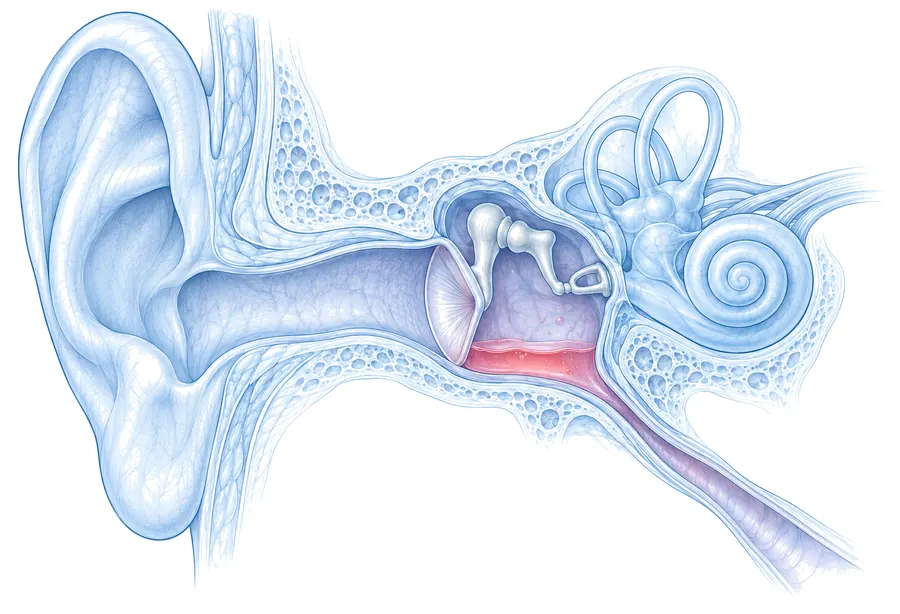
A middle ear infection, also called acute otitis media, develops behind the eardrum. It often starts after a cold and can involve viruses, bacteria, or both. Ear tugging, fever, and fussiness can happen with either kind. [1] [2] [4]
Symptoms alone cannot tell you whether a middle ear infection is viral or bacterial. A clinician uses the ear exam, your child’s age, and the severity of symptoms to decide whether antibiotics are needed. [1] [2] [3]
| Sign | What may fit a mild case or another cause | When to seek care or expect treatment |
|---|---|---|
| Ear pain after a cold | Mild pain that is already easing may get better with pain relief and observation after an exam. [1] [2] | Moderate or severe pain, or ear pain that has lasted at least 48 hours, makes immediate treatment more likely if the exam confirms an infection. [2] |
| Fever | A temperature below 102.2°F (39°C) can be consistent with a mild case in a child who otherwise qualifies for watchful waiting. [2] | Call for a fever of 102.2°F (39°C) or higher with a suspected ear infection. Young babies need care at a lower temperature. [1] |
| Tugging at the ear | Tugging alone can be normal in babies and young children. [14] | Tugging along with pain, fever, or trouble sleeping is a reason to ask the pediatrician about an ear exam. [1] [4] [5] |
| Fluid behind the eardrum | Fluid can linger after a cold or an ear infection and often clears on its own. [1] [4] | A clinician looks for fluid behind the eardrum and signs of an acute infection. Moderate or marked bulging supports the diagnosis. With mild bulging, the clinician also looks for ear pain that started less than 48 hours ago or marked redness of the eardrum. [2] [3] |
| Symptoms over time | A mild case that is steadily improving during the agreed watch period may clear without antibiotics. [1] [2] | Worsening pain, new drainage, or a lack of improvement during the watch period means it’s time to call back. [1] [2] |
When to see a doctor
Call your child’s pediatrician if you suspect an ear infection, especially if your child is too young to describe what hurts. Tell the office when symptoms started, your child’s temperature, and whether you’ve noticed any change in hearing or fluid coming from the ear. [1] [4]
- Call right away if your baby is younger than 3 months and has a temperature of 100.4°F (38°C) or higher. [1]
- Call if your child has a fever of 102.2°F (39°C) or higher, moderate or severe ear pain, or symptoms that are getting worse. [1] [2]
- Call if you see pus or other fluid coming from the ear, including if the ear pain suddenly eases and drainage starts. Tell the pediatrician if your child has ear tubes. [1] [4] [6]
- Call if ear symptoms have lasted more than 2 to 3 days or your child seems to have trouble hearing. If you already have a watchful waiting plan, follow the office’s instructions for checking back. [1] [2]
Get urgent care: Get medical care right away if there is redness or swelling behind the ear, especially if the ear starts to stick out. Go to the ER if your child has a stiff neck with fever. Call 911 immediately if your child has trouble breathing, cannot be awakened, or develops swelling of the tongue or throat. If you suspect a severe allergic reaction and your child has an epinephrine auto-injector, use it immediately and call 911. [4] [5] [7] [8]
What the doctor checks
The pediatrician asks how long the pain has lasted, how much it hurts, and whether your child has had a fever or ear drainage. They look in both ears with a lighted tool called an otoscope. They may use a gentle puff of air to see how well the eardrum moves. An eardrum that barely moves can be a sign of fluid behind it. Bulging helps the pediatrician tell an active infection from fluid left behind after a cold or a previous infection. [2] [3] [4]
Once the exam confirms a middle ear infection, the pediatrician considers your child’s age, symptoms, and which ears are affected. The American Academy of Pediatrics (AAP) guideline covers uncomplicated middle ear infections in children ages 6 months through 12 years. Call the pediatrician for an individual plan if your child is younger than 6 months, has ear tubes or a cochlear implant, has a weakened immune system, or has a condition such as cleft palate or Down syndrome. [2]
- Age 6 to 23 months, mild infection in one ear: The pediatrician may prescribe an antibiotic right away or offer watchful waiting with close follow-up. For mild infections in both ears at this age, the guideline recommends antibiotics. [2]
- Ages 2 through 12 years, mild infection in one or both ears: Watchful waiting may be an option if you can reach the pediatrician and get follow-up care if needed. [2] [3]
- Ages 6 months through 12 years, severe symptoms: The guideline recommends starting antibiotics for a confirmed infection in one or both ears if your child has moderate or severe pain, pain for at least 48 hours, or a fever of 102.2°F (39°C) or higher. New drainage from a confirmed middle ear infection is also a reason to treat. Children with ear tubes may need a different treatment. [2] [6]
If you are prescribed an antibiotic
Amoxicillin (Amoxil) is usually the first choice for a child who needs antibiotics for a middle ear infection. The pediatrician may choose amoxicillin-clavulanate (Augmentin) if your child took amoxicillin in the past 30 days, has pink eye with pus at the same time, or has had repeat ear infections that did not improve with amoxicillin. [2] [3]
Before your child starts an antibiotic, tell the prescriber and pharmacist about any previous reaction to an antibiotic, any kidney or liver disease, and all medicines your child takes. If amoxicillin-clavulanate ever caused jaundice or liver problems, tell them so they can choose a different medicine. [9] [10] [15] [16]
The AAP guideline lists a typical course of 10 days for children younger than 2 or for children with severe symptoms. For infections without severe symptoms, it lists 7 days for ages 2 through 5 and 5 to 7 days for ages 6 through 12. Give the antibiotic exactly as prescribed and for the number of days your child’s prescriber specifies. Call the pharmacist if the label is unclear or you have a question about a missed dose. [2] [9] [10]
Your child may still need pain relief while the antibiotic has time to work. Call the pediatrician if symptoms worsen or haven’t begun to improve after 48 to 72 hours on the antibiotic. The pediatrician may need to look in the ear again before deciding whether to change treatment. Diarrhea or nausea can occur with amoxicillin or amoxicillin-clavulanate. [2] [9] [10]
Call the pediatrician promptly if your child develops a rash during treatment or has severe, watery, or bloody diarrhea during treatment or in the two months after finishing the antibiotic. Get urgent medical care for a rash with blisters, peeling skin, or sores in the mouth or eyes. Call 911 for trouble breathing or swelling of the tongue or throat. [8] [9] [10] [15] [16]
Feel better at home
- Treat the pain first. Ask the pediatrician which pain medicine is right for your child. Ibuprofen can be an option from 6 months of age. Check with the pediatrician before using it if your child is drinking poorly, has lost a lot of fluid from vomiting or diarrhea, or has kidney disease. Ask before giving acetaminophen to a child younger than 2 years or a child with liver disease. Follow the product label or the pediatrician’s instructions, and check that no other medicine you give contains acetaminophen. Give aspirin only if your child’s clinician specifically directs you to. [1] [2] [11] [18] [19]
- Try a warm washcloth. Hold a comfortably warm washcloth against the outside of the sore ear if your child finds it soothing. [4]
- Offer fluids and time to rest. Drinking fluids and resting can help your child feel more comfortable while they recover. [1]
- Check before putting drops in the ear. Ask the pediatrician before putting drops in a painful or draining ear, especially if your child has ear tubes or may have a hole in the eardrum. Use only drops the clinician confirms are safe for that ear. Do not use over-the-counter swimmer’s ear drying drops if your child has drainage, ear tubes, or a hole in the eardrum. Keep cotton swabs out of the ear canal. [6] [12] [20]
What watchful waiting means
Watchful waiting is a plan made after the ear exam. Treat the pain at home and follow the pediatrician’s deadline for checking back. The AAP guideline calls for a plan to start antibiotics if your child gets worse or has not improved within 48 to 72 hours of when symptoms began. Before you leave, make sure you know whom to call if your child gets worse and when the pediatrician wants an update. [1] [2]
The pediatrician may give you a delayed prescription with instructions for when to start it, or ask you to call back so they can decide whether your child needs another exam or an antibiotic. Start a delayed prescription only as directed by your child’s clinician. Use only medicine prescribed for your child for this infection. Never use leftover or shared antibiotics, and do not save any for a future illness. If your child is improving, they may recover without the antibiotic and avoid side effects such as diarrhea or rash. [1] [2] [9] [17]
When antibiotic ear drops help
A middle ear infection behind an intact eardrum: Antibiotic ear drops go into the ear canal. With an intact eardrum, the infection is on the other side, so when an antibiotic is needed, the pediatrician usually prescribes one your child takes by mouth. New drainage can mean the eardrum has opened. Call the pediatrician so they can check where the fluid is coming from and choose treatment. [2] [4] [6]
Drainage through ear tubes: Call the pediatrician if your child has an ear tube and develops drainage. Ear tubes give drops a way to reach the middle ear. Prescription antibiotic ear drops alone are usually recommended for uncomplicated drainage through the tube. Seek prompt care if your child has a fever of 101.3°F (38.5°C) or higher, seems very ill, or has redness or swelling spreading around the ear. Tell the clinician if your child is also being treated for another infection. [5] [6]
Swimmer’s ear: This is an infection of the outer ear canal. It may itch or hurt when you gently tug on the outer ear. Antibiotic ear drops are commonly used for swimmer’s ear. Since drainage can also come from a middle ear infection, contact the pediatrician to find out which kind your child has. [1] [12]
Frequently asked questions
What is the best antibiotic for a child’s ear infection?
For most children who need an antibiotic for a middle ear infection, amoxicillin is the first choice. Tell the pediatrician if your child took amoxicillin in the past 30 days, has pink eye with pus, has had repeated middle ear infections that did not improve with amoxicillin, or has had an allergic reaction to a penicillin. These details can change which antibiotic the pediatrician chooses. [2] [3]
Does a baby with an ear infection need antibiotics?
It depends on the baby’s age and exam. The AAP’s watchful waiting guideline starts at 6 months. For a younger baby with a suspected ear infection, call the pediatrician for guidance. If your baby is younger than 3 months and has a fever of 100.4°F (38°C) or higher, call right away. [1] [2]
Is muffled hearing normal after an ear infection?
Fluid can stay behind the eardrum after the pain and fever go away, and it can temporarily muffle hearing. Tell the pediatrician if you notice a change in hearing or have concerns about speech. If middle ear fluid lasts 3 months or longer, the guideline recommends a hearing test. A child already at risk for speech, language, or learning problems should have a hearing test even if the fluid has been present for less than 3 months. Hearing testing is also recommended before planned ear tube surgery. [1] [4] [6] [21]
Can my child get another ear infection soon after treatment?
Yes. If ear pain or fever comes back, call the pediatrician for another exam. Tell them which antibiotic your child took and when. That information can affect which treatment they recommend if there’s a new infection. [2] [4]
Do adults need antibiotics for a middle ear infection?
Adults with a confirmed acute middle ear infection are often prescribed antibiotics. If you suspect an ear infection, contact your clinician for an ear exam and treatment advice. [13]
Sources
- Ear Infection Basics. Centers for Disease Control and Prevention. https://www.cdc.gov/ear-infection/about/index.html
- Lieberthal AS, et al. The Diagnosis and Management of Acute Otitis Media. Pediatrics. 2013. American Academy of Pediatrics.
- Outpatient Clinical Care for Pediatric Populations. Centers for Disease Control and Prevention. https://www.cdc.gov/antibiotic-use/hcp/clinical-care/pediatric-outpatient.html
- Ear Infections in Children – Acute. MedlinePlus. https://medlineplus.gov/ency/article/000638.htm
- Earache. Seattle Children’s. https://www.seattlechildrens.org/conditions/a-z/earache/
- Clinical Practice Guideline: Tympanostomy Tubes in Children (Update). American Academy of Otolaryngology–Head and Neck Surgery Foundation. https://aao-hnsfjournals.onlinelibrary.wiley.com/doi/10.1177/01945998211065662
- When and Where to Get Medical Care. Seattle Children’s and Nemours KidsHealth. https://kidshealth.org/SeattleCH/en/parents/emergencies.html
- Anaphylaxis. MedlinePlus. https://medlineplus.gov/ency/article/000844.htm
- Amoxicillin. MedlinePlus. https://medlineplus.gov/druginfo/meds/a685001.html
- Amoxicillin and Clavulanic Acid. MedlinePlus. https://medlineplus.gov/druginfo/meds/a685024.html
- Acetaminophen for Fever and Pain in Children. HealthyChildren.org, American Academy of Pediatrics. https://www.healthychildren.org/English/safety-prevention/at-home/medication-safety/Pages/Acetaminophen-for-Fever-and-Pain.aspx
- Preventing Swimmer’s Ear. Centers for Disease Control and Prevention. https://www.cdc.gov/healthy-swimming/prevention/preventing-swimmers-ear.html
- Ear Infections in Adults – Acute. MedlinePlus. https://medlineplus.gov/ency/article/007865.htm
- Ear – Pulling At or Rubbing. Seattle Children’s. https://www.seattlechildrens.org/conditions/a-z/ear---pulling-at-or-rubbing/
- Amoxicillin prescribing information. DailyMed. https://dailymed.nlm.nih.gov/dailymed/drugInfo.cfm?setid=efc66d77-1733-41e1-9aed-7c10a4b4ba96
- Augmentin prescribing information. DailyMed. https://dailymed.nlm.nih.gov/dailymed/lookup.cfm?setid=04a31a42-d79e-bbb4-e063-6394a90a63ee
- Antibiotic Use and Antimicrobial Resistance Facts. Centers for Disease Control and Prevention. https://www.cdc.gov/antibiotic-use/about/index.html
- Infant ibuprofen Drug Facts label. DailyMed. https://dailymed.nlm.nih.gov/dailymed/fda/fdaDrugXsl.cfm?setid=c2302bfe-b367-4867-b803-29f066a42dc7
- Children’s acetaminophen Drug Facts label. DailyMed. https://dailymed.nlm.nih.gov/dailymed/drugInfo.cfm?setid=ce0a1fbc-7345-462b-b0da-c7149bdc288c
- Clinical Practice Guideline: Acute Otitis Externa. American Academy of Otolaryngology–Head and Neck Surgery Foundation. https://www.entnet.org/resource/aao-hnsf-updated-cpg-acute-otitis-externa-press-release-fact-sheet/
- Clinical Practice Guideline: Otitis Media with Effusion (Update). American Academy of Otolaryngology–Head and Neck Surgery Foundation. https://wptest.entnet.org/resource/aao-hnsf-updated-cpg-ome-press-release-fact-sheet/
This guide is general information written from the sources listed above and checked in November 2026. It does not replace advice from your own doctor, dentist or pharmacist.